
The Classroom Struggle Over Racial Harmony
I'm Still HereThis flow examines how seemingly peaceful school settings reveal both unspoken bias and opportunities to confront it.
increasing Bearing strength in each event
 decreasing
Bearing strength in each eventdecreasingHarmony at First Glance
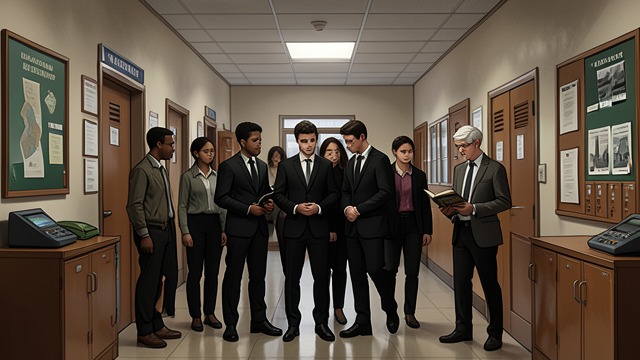
Harmony at First Glance
Few open incidents
Austin remembers no major racial spectacle at her high school: no blackface parties, violent fights, or conspicuous hateful graffiti. Students of color are numerous enough to gather and make a visible community.
The unresolved question
The absence of public conflict can look like proof that the school has moved beyond racism. Austin's experiences gradually show that calm may leave the beliefs shaping authority untouched.
A Teacher's Admission
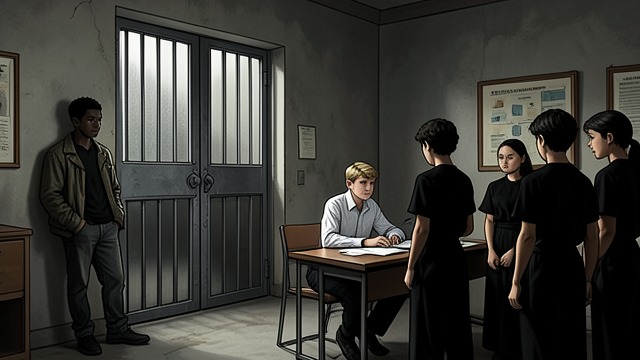
A Teacher's Admission
Bias spoken aloud
Ms. Phillips reveals that her seating charts were designed to separate Black students, whom she had expected to disrupt one another. She acknowledges that she had not applied the same suspicion to white students.
The room changes
Her honesty breaks the quiet assumption that everyone has been treated neutrally. For Austin, the disclosure is unsettling as well as potentially corrective, because it shows what a trusted teacher had silently thought about her.
The Burden of the Aha Moment
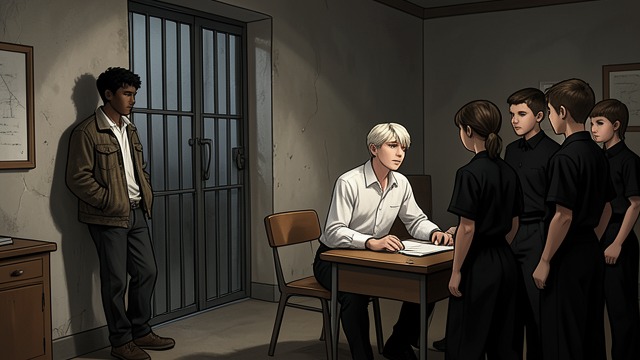
The Burden of the Aha Moment
A complicated reaction
Austin is unsure whether she should celebrate her teacher's realization. She wonders whether awareness will make her safer and whether other teachers have been judging her in similar ways.
Harmony reconsidered
The confession forces her to look beyond her own sense of friendly relations. An absence of overt racism does not reveal whether bias is operating in classrooms and decisions made by adults.
A Poem and a Private Boundary
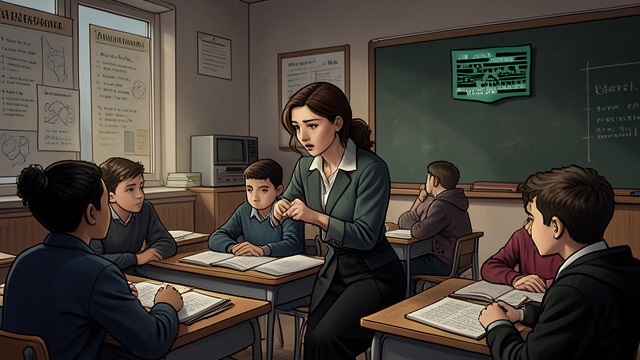
A Poem and a Private Boundary
The mask named
Mr. Slivinski assigns Paul Laurence Dunbar's poem about wearing a mask. Austin recognizes the emotional knowledge in its lines and thinks about what she hides in predominantly white classrooms.
Refusing the spokesperson role
She folds inward when discussion begins, unsure whether classmates have earned access to this vulnerable experience. Her teacher does not call on her, allowing the poem to be discussed without turning Austin into a representative for all Black people.
The University Claim

The University Claim
Resentment exposed
A classmate claims that affirmative action cost her admission to the University of Michigan, treating a Black applicant as an undeserving thief of her place. Austin hears a broader claim about who is presumed qualified.
Harmony fails to teach
The teacher freezes as Austin's anger rises. The episode shows that years in a racially diverse school have not necessarily challenged the belief that whiteness itself merits preference.
During Austin's Catholic high-school years
During a religion class in high school
Immediately after Ms. Phillips's confession
During Austin's freshman year
Near the end of Austin's senior year
